
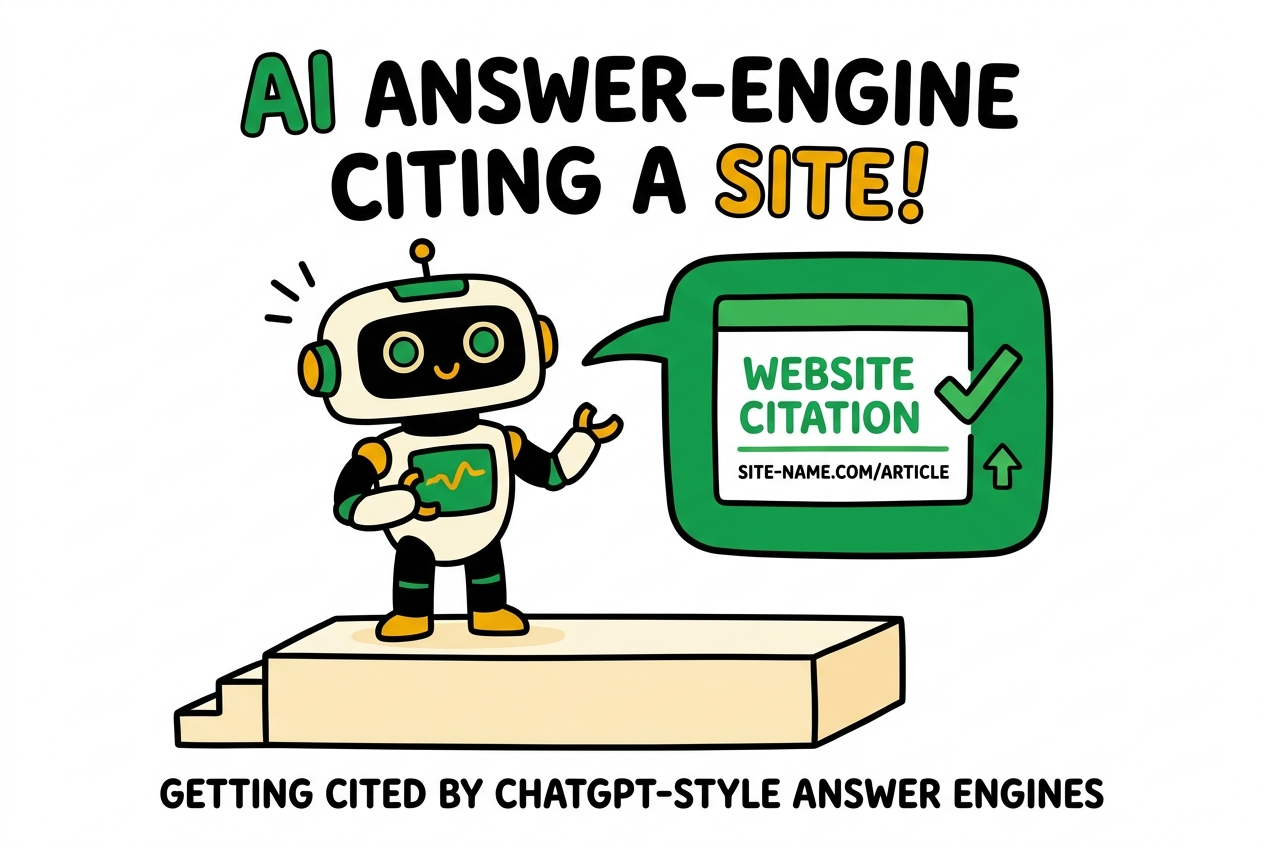
For two decades, optimising a website meant optimising for a list of ten blue links. That is no longer where most answers are decided. ChatGPT, Perplexity, Claude, and Google’s AI Overviews increasingly answer a question directly and cite a handful of sources — and if your site isn’t one of them, the click never happens. Getting chosen as that source is the discipline of Answer Engine Optimization (AEO) and Generative Engine Optimization (GEO).
The good news for developers: AEO/GEO is mostly engineering, not guesswork. It rewards machine-readable structure, fast and crawlable pages, and content shaped like an answer. This guide breaks down how answer engines pick sources and gives you a concrete checklist you can ship this week.
AEO vs GEO vs SEO
SEO optimises for ranking in a results page. AEO optimises for being the source an answer engine quotes when it responds directly. GEO is the same goal for generative surfaces like AI Overviews. They aren’t competing strategies — they’re layers. Most engines still ground their answers in a search index, so the page that ranks is usually the page that gets cited. AEO/GEO simply add weight to structure and extractability on top of solid SEO.
How answer engines choose and cite sources
Under the hood, most answer engines do a version of retrieval-augmented generation: they turn the user’s question into one or more searches, retrieve candidate passages, and synthesise an answer that cites the passages it leaned on. That pipeline has three implications you can act on:
- They retrieve passages, not pages. A self-contained paragraph that fully answers a sub-question is far more citable than the same fact buried mid-article.
- They need to trust the source. Clear entity identity, structured data, consistency across the web, and freshness all raise the odds your passage is the one quoted.
- They have to be able to read you. If an AI crawler is blocked, or the content only renders client-side, you may never enter the candidate set at all.
The developer’s AEO/GEO checklist
Seven concrete things to ship, ordered roughly by effort-to-impact. Each maps to a reference in the build-site methodology.
- 01
Publish an llms.txt
A concise, plain-text map of what your site is and which pages matter most. It gives answer engines an authoritative summary instead of guessing from your nav.
build-site ref · geo-answer-engines
- 02
Mark up entities with JSON-LD
Organization, WebSite, Product, FAQPage, Article, and Breadcrumb schema tell engines who you are and what each page means — the difference between being parsed and being guessed at.
build-site ref · structured-data
- 03
Grant AI crawler access
Don't accidentally block GPTBot, ClaudeBot, PerplexityBot, or Google-Extended in robots.txt. No access means no citation.
build-site ref · geo-answer-engines
- 04
Write answer-shaped content
Lead with the answer. Use a clear question as a heading, answer it in the first sentence, then expand. Engines extract self-contained passages, not whole pages.
build-site ref · seo-page-brief
- 05
Be consistent about your entity
Use the same name, description, and facts everywhere — site, schema, social profiles. Contradictions make engines distrust the source and drop the citation.
build-site ref · structured-data
- 06
Pass Core Web Vitals & be crawlable
Slow, JS-only, or unindexable pages rarely get retrieved. Server-render the content that matters and keep LCP/CLS in the green.
build-site ref · lighthouse-perf-gate
- 07
Keep it fresh and sourced
Answer engines favour current, well-cited material. Date your content, update it, and link to primary sources.
build-site ref · geo-answer-engines
How this relates to traditional SEO
None of this discards SEO — it compounds it. Crawlability, internal linking, page speed, and topical authority are still the foundation; answer engines just add a structure-and-extractability tax on top. The practical takeaway: fix your SEO fundamentals first, then layer AEO/GEO signals (llms.txt, richer schema, answer-shaped passages) on the pages that matter. A page that does both ranks and gets cited.
Automating it with your AI coding agent
The checklist above is mechanical enough to automate. That’s exactly what traffix.dev does: it measures your site against these signals — llms.txt, structured data, AI-crawler access, Core Web Vitals, answer-shaped content — and hands each gap to your own AI coding agent over MCP, with the matching build-site playbook attached. Your agent makes the fix in your repo, on your tokens. You get the prioritised list; your agent does the work.
Frequently asked
- What is the difference between SEO, AEO, and GEO?
- SEO optimises for ranking in a list of blue links. AEO (Answer Engine Optimization) optimises for being the source an answer engine quotes when it responds directly. GEO (Generative Engine Optimization) is the same goal for generative experiences like AI Overviews and ChatGPT. They share most fundamentals — crawlability, structure, authority — but AEO/GEO weight machine-readable structure and clear, extractable answers more heavily.
- Does AEO replace SEO?
- No. The same content that ranks well in classic search is usually what answer engines retrieve and cite, because many of them ground their answers in a search index. AEO is a layer on top of solid SEO, not a replacement — you still need to be crawlable, fast, and authoritative.
- Is llms.txt actually used by AI engines?
- Adoption is still emerging and not every engine reads it today, but it is cheap to add, does no harm, and an increasing number of tools and crawlers look for it. Treat it like an early-but-low-cost signal: a concise map of what your site is and which pages matter.
- How do I know if AI engines can crawl my site?
- Check your robots.txt for explicit disallow rules against AI user-agents like GPTBot, ClaudeBot, PerplexityBot, and Google-Extended. No rule means allowed. If you want to be cited in AI answers, these crawlers need access.
Related guides
- Core Web Vitals: a developer's guide to passing themLCP, INP, and CLS explained — the thresholds, what causes failures, and the concrete fixes. Treat Core Web Vitals as a build gate so slow pages never ship and never cost you rankings.
- Structured data (JSON-LD) for SEO & AI search: a developer's guideWhat structured data is, the schema types that actually matter, and copy-paste JSON-LD for Organization, FAQ, Breadcrumb, Article, and Product — so search engines and AI understand your pages.
- llms.txt: a developer's guide (with a real example)What llms.txt is, exactly how to write one, and what the 2026 evidence says it actually does — with a working example you can copy. Ten minutes to ship, but not the AEO priority most guides claim.